
How big is a 20x20 island booth?
It is 400 square feet, 20 feet on each side, and open to the aisle on all four sides, which is why it is designed around a center structure rather than a backwall.
Booth Types / 20x20 Island Booths in Dallas: 400-Square-Foot Four-Sided Exhibits
A 20x20 island gives Dallas exhibitors 400 square feet open on all four sides, where a center tower, rigging, and a true walkthrough replace the single backwall of inline space.
 Booth Type
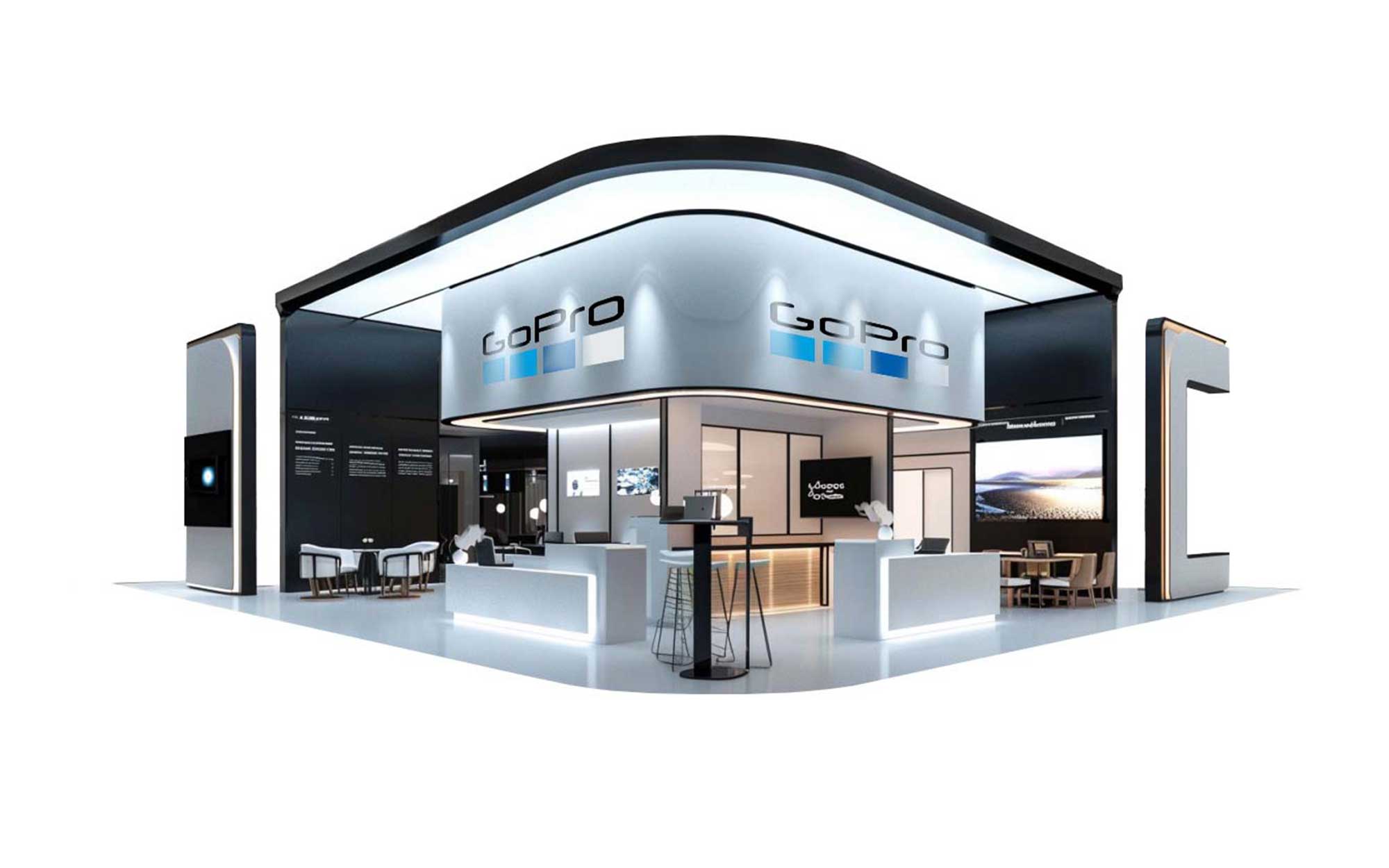
The hardest adjustment going from inline to a 20x20 is giving up the wall. There is nowhere to mount a giant graphic and nothing to stand behind, so the brand has to live overhead and at the center. The standard answer is a structural tower, often paired with a hanging sign, that carries the logo and headline at 16 to 20 feet where it clears the crowd. Everything at eye level stays lower and more open so the booth does not wall itself off from the aisles it is supposed to invite.
Circulation is the second design driver. A 20x20 should let a visitor step in from any side and reach the center without weaving around furniture. Most layouts ring a central feature, a demo, a bar, or a product plinth, with open lanes, and push storage into a compact locked core under the tower so it disappears from view.
Islands are where the show's overhead services come into play. At the Kay Bailey Hutchison Convention Center Dallas, a hanging sign and any truss go through the listed rigging partner, and that order needs to land well ahead of the show with weights, dimensions, and a rigging plot. Get the sign approved early; it sets the visual ceiling for the whole booth and the lead time is the longest item on the build.
Power and freight both step up. A 20x20 typically wants multiple circuits or a higher-amp drop fed to a central distribution point under the tower, so cabling runs up the structure rather than across open floor. The booth itself crates, arrives on scheduled receiving, and installs with a labor crew over a multi-hour call. Budget the install and dismantle as real line items, not an afterthought, because four-sided builds take longer to dress than any inline space.
Choose a 20x20 when you need rigging height and a four-sided presence, not merely more floor. If a hanging sign and a walkthrough are the goal, this is the smallest island that delivers both. It is the natural move for a company that has outgrown a 10x20 and wants to look like a category leader at a flagship DFW show.
Stay in inline space a while longer if budget is tight or the program only exhibits once or twice a year, since island freight, rigging, and labor carry real recurring cost. When the show, the traffic, and the brand all justify it, a 20x20 at the Kay Bailey Hutchison Convention Center Dallas or the Gaylord Texan Resort and Convention Center is the cleanest way to own a corner of the floor.
FAQ
It is 400 square feet, 20 feet on each side, and open to the aisle on all four sides, which is why it is designed around a center structure rather than a backwall.
Yes. Islands support hanging signs, ordered through the venue's listed rigging partner with weights and a rigging plot submitted well ahead of the show.
With all four sides open there is no wall to brand, so a central tower or hanging sign carries the logo overhead while the perimeter stays low and open for entry.
Yes. A four-sided island crates, arrives on scheduled receiving, and installs with a union labor crew over a multi-hour call at Dallas convention venues.
When you need rigging height and a four-sided walkthrough, not simply more floor. The 20x20 is the smallest island that delivers a hanging sign and full circulation.
Start the conversation
Bring us your flagship Dallas show and we will anchor a 400-square-foot island around a rigged center tower, open sightlines, and a real walkthrough. Start your 20x20 island plan today.