Services / Trade Show Program Management Across Dallas-Fort Worth Venues

Trade Show Program Management Across Dallas-Fort Worth Venues

Orchestrating coordinated execution for recurring trade show commitments demands step-by-step oversight of timelines, vendor alignments, and property-specific protocols throughout the Dallas-Fort Worth region.

Trade Show Program focusProgram management for repeat shows
Venue checkpointArlington Convention Center
Scope pressureStrategic Roadmap Development for Multi-Event Calendars
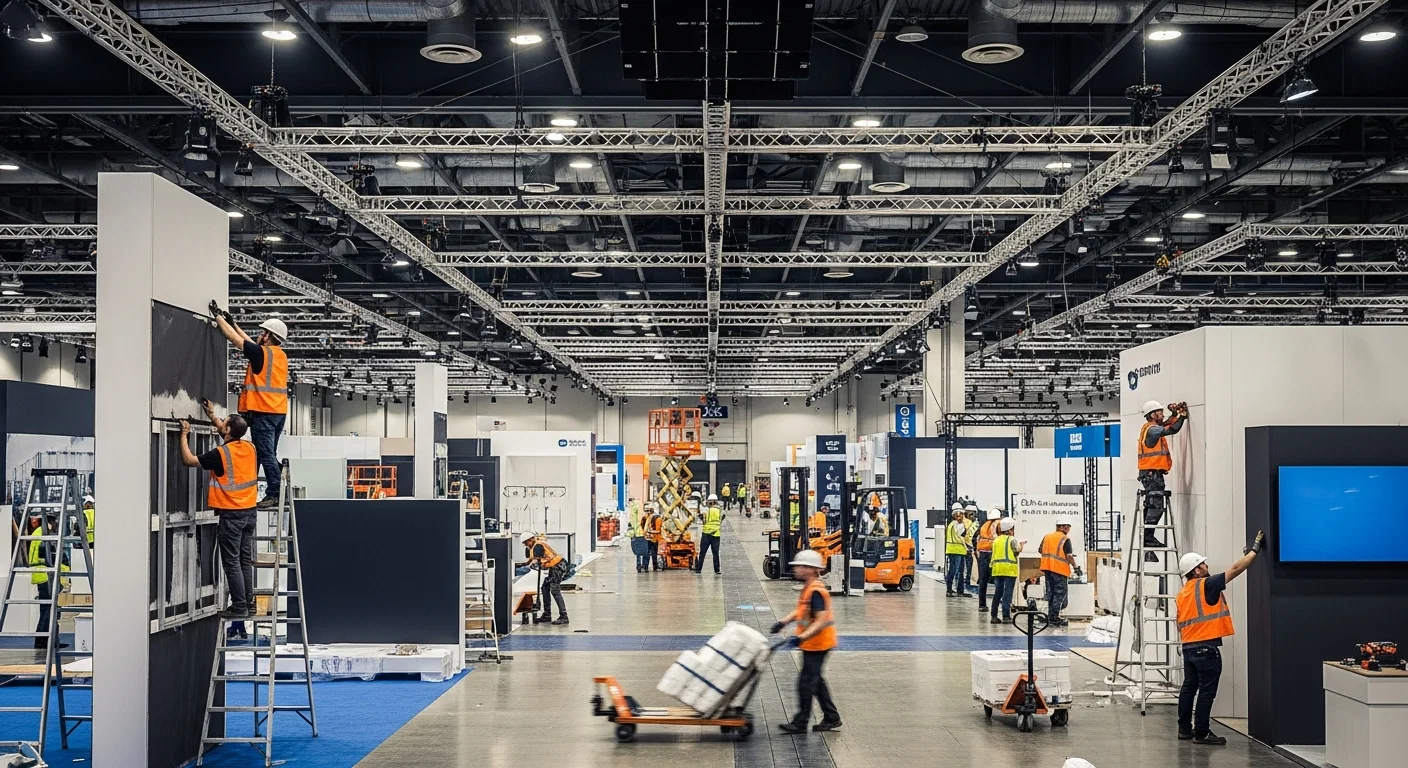
Trade Show Program Management in Dallas visual for Exhibit House of DallasService

Strategic Roadmap Development for Multi-Event Calendars

Crafting a strategic roadmap begins with mapping your organization's event calendar against Dallas-Fort Worth venue availabilities, identifying clusters like the core Dallas venues including KBHCCD, Dallas Market Hall, and Fashion Industry Gallery, alongside Irving Convention Center at Las Colinas and Gaylord Texan Resort & Convention Center. This phase involves auditing past performance data to prioritize high-ROI shows, then layering in lead times for booth customizations that align with each facility's structural constraints, such as column placements or ceiling heights documented in exhibitor guides for the Kay Bailey Hutchison Convention Center Dallas. Program leads establish phased deliverables, from initial concept sketches to final engineering drawings, ensuring all elements cascade without delays into fabrication queues.

Coordination extends to forecasting freight volumes based on booth footprints, anticipating dock congestion during major conventions at the Kay Bailey Hutchison Convention Center Dallas where advance scheduling through service partners is mandatory for efficient load-in. This roadmap incorporates buffer periods for unforeseen adjustments, like material revisions prompted by venue feedback on weight distributions or fire safety clearances, while aligning with broader goals such as lead generation targets tied to specific events in the Omni Dallas Hotel or Hyatt Regency Dallas.

Ongoing roadmap refinement occurs quarterly, incorporating lessons from prior deployments, such as optimizing dismantle sequences to accelerate turnover at high-volume sites like Dallas Market Hall, thereby freeing resources for the next scheduled activation.

Vendor Synchronization and Partnership Oversight

Synchronizing an ecosystem of vendors starts with vetting providers experienced in Dallas-Fort Worth operations, particularly those familiar with service partner requirements at the Kay Bailey Hutchison Convention Center Dallas, where certain services necessitate coordination through official channels for utilities and rigging. Program management assigns dedicated liaisons to bridge communication gaps between designers, fabricators, logistics firms, and on-site installers, enforcing standardized contracts that outline deliverables, SLAs, and penalties for variances to maintain program velocity.

This oversight includes joint kickoff meetings to align on critical paths, such as shipping manifests formatted for dock acceptance at the Kay Bailey Hutchison Convention Center Dallas, which specifies procedures for freight handling and storage. Regular audits verify vendor adherence to venue protocols, like pre-ordering utilities to avoid on-site surcharges, while facilitating cross-vendor collaborations for hybrid builds requiring both Exhibitor Appointed Contractor agility and General Contractor scale at facilities like the Irving Convention Center at Las Colinas.

Conflict resolution protocols ensure swift escalations, preserving momentum for programs spanning multiple venues, from the compact setups in Fashion Industry Gallery to expansive configurations in the Gaylord Texan Resort & Convention Center.

  • Pre-qualification of vendors based on DFW venue portfolios
  • Weekly status huddles during active phases
  • Centralized document repositories for specs and approvals

Logistics and Timeline clear sequencing Engineering

clear sequencing in logistics hinges on dissecting each venue's infrastructure, such as the dock operations at Kay Bailey Hutchison Convention Center Dallas that mandate timed appointments for inbound shipments and enforce strict hours for moves to prevent bottlenecks during multi-hall events. Program coordinators develop master schedules integrating carrier routings from national hubs to local distribution points, optimizing for Just in Time arrivals that sync with installation windows across Dallas-Fort Worth clusters.

Timeline engineering incorporates Gantt charts segmented by venue type—convention centers like Dallas Market Hall demanding rapid turnarounds versus hotel ballrooms in Omni Dallas Hotel allowing phased builds—while building in redundancies for weather-impacted trucking or carrier delays common in the region's expansive metro area. This ensures dismantle crews transition in the right order to the next event, minimizing idle time and storage costs.

Real-time tracking via integrated platforms monitors shipment statuses, triggering alerts for deviations that could cascade into show-day impacts, particularly critical for programs with Back to Back activations in adjacent markets like Grapevine and Irving.

Financial Governance and Resource Optimization

Financial governance establishes baselines through historical benchmarking against Dallas-Fort Worth event scales, projecting costs for utilities at Kay Bailey Hutchison Convention Center Dallas where early orders lock in rates for power drops and data lines essential for interactive exhibits. Program budgets delineate allocations for fabrication, freight, labor coordination, and contingencies, with monthly forecasts adjusting for confirmed booth sizes and venue surcharges.

Optimization tactics include volume discounts negotiated across the program for recurring services like those interfacing with service partners at major venues, alongside spend analytics identifying efficiencies such as consolidating shipments to reduce per-unit logistics expenses. Variance reporting flags overruns early, enabling corrective actions like material substitutions compliant with Fashion Industry Gallery specs without compromising quality.

Resource pools for supervision and oversight are scaled dynamically, prioritizing high-stakes deployments at Hilton Anatole or Sheraton Dallas Hotel while leveraging modular assets reusable across Irving Convention Center at Las Colinas events.

  • ROI tracking per event tied to program KPIs
  • Escalation thresholds for budget deviations
  • Annual audits for cost-saving opportunities

Property-specific Compliance and Risk Framework

Compliance frameworks are tailored to each Dallas-Fort Worth venue's exhibitor directives, such as the service partner mandates at Kay Bailey Hutchison Convention Center Dallas for electrical, plumbing, and telecom services, requiring program managers to route orders through approved channels to sidestep penalties. This extends to dock protocols dictating pallet configurations and liftgate restrictions, ensuring all freight complies prior to dispatch.

Risk frameworks conduct venue audits pre-program, mapping potential flashpoints like overlapping move-ins at Dallas Market Hall against contingency playbooks that include alternate carrier options or phased installs. Insurance alignments cover multi-site exposures, while safety drills prepare teams for emergency egress paths unique to configurations in Hyatt Regency Dallas or Fairmont Dallas.

Proactive monitoring during events flags deviations, such as utility shortfalls prompting immediate service partner interventions, safeguarding program integrity across the diverse venue landscape from Addison specials to Plano expos.

Performance Evaluation and Continuous Refinement

Post-event evaluations dissect execution against benchmarks, reviewing dock utilization efficiency at Kay Bailey Hutchison Convention Center Dallas or utility performance metrics to inform future orders. Stakeholder debriefs capture qualitative insights on booth functionality in varied lighting at Omni Dallas Hotel versus open halls like Dallas Market Hall, feeding into program dashboards.

Refinement cycles prioritize high-impact adjustments, such as streamlining dismantle checklists for faster turnovers at high-frequency venues in the Grapevine cluster, while predictive modeling forecasts resource needs for upcoming seasons based on confirmed bookings at Irving Convention Center at Las Colinas.

Long-term program evolution incorporates trend analysis from market drivers, ensuring adaptability to evolving exhibitor needs across Fort Worth, Arlington, and core Dallas facilities.

  • Quantitative KPIs: on-time installs, budget adherence
  • Qualitative surveys: attendee engagement correlations
  • Benchmarking against peer programs

Scalable Execution for Expanding Programs

Scaling programs involves modular frameworks that adapt core processes to increased event volumes, replicating proven dock coordination tactics from Kay Bailey Hutchison Convention Center Dallas across emerging slots in Frisco or Allen venues. This scalability embeds automation in reporting and approvals, freeing coordinators for strategic oversight amid growth.

Expansion planning assesses capacity thresholds, introducing tiered supervision for mega-events at Gaylord Texan Resort & Convention Center while maintaining boutique attention for Fashion Industry Gallery activations. Vendor tiers expand proportionally, vetted for surge handling without quality dips.

Sustained scalability metrics track program health, guiding investments in training or tech to support ambitions spanning the full DFW recommended locations from Bedford to Cedar Hill.

FAQ

Frequently Asked Questions on Trade Show Program Management

What distinguishes trade show program management from single-event project management?

Program management oversees a portfolio of events with centralized planning, shared resources, and cross-show learnings, whereas project management focuses on isolated executions; in DFW, this means unified handling of venue protocols like Kay Bailey Hutchison service partners across multiple deployments.

How do you ensure compliance with diverse DFW venue rules?

Through property-specific checklists derived from official exhibitor guides, such as dock scheduling and utility pre-orders at Kay Bailey Hutchison Convention Center Dallas, integrated into master timelines for consistent adherence.

What logistics challenges arise in Dallas-Fort Worth multi-venue programs?

Peak overlapping load-ins at Dallas venues cluster require advance dock bookings and carrier coordination, mitigated by predictive scheduling and contingency routing to facilities like Irving Convention Center.

How is budget control maintained across a full program?

Via rolling forecasts, vendor spend caps, and post-event audits benchmarking against baselines like utility costs at major halls, enabling proactive adjustments for sustained fiscal discipline.

Can program management adapt to last-minute show additions?

Yes, with flexible buffers in core timelines and pre-vetted vendor panels ready for rapid mobilization, tested against scenarios like urgent fills at Omni Dallas Hotel ballrooms.

What metrics define program success in this market?

Key indicators include on-time completion rates exceeding 98%, budget variances under 5%, and ROI uplifts from refined executions at recurring sites like Dallas Market Hall.

Start the conversation

focus Your Trade Show Program

Secure coordinated excellence across DFW events. Schedule a program audit consultation today to align your strategy with venue realities.

Start your scope